
AIAA Pacific Northwest Section Presents
18th Annual
Tech Symposium
Where Pacific Northwest aerospace meets the future
Register Now →
← Back to Symposium Hub
Join AIAA’s Pacific Northwest Section for a full day of cutting-edge aerospace research, engineering innovation, and industry networking set against the inspiring backdrop of the Museum of Flight. This year’s symposium brings together researchers, engineers, and students from across the region.
20 presentations across aerospace, propulsion, avionics & more
Our Speakers
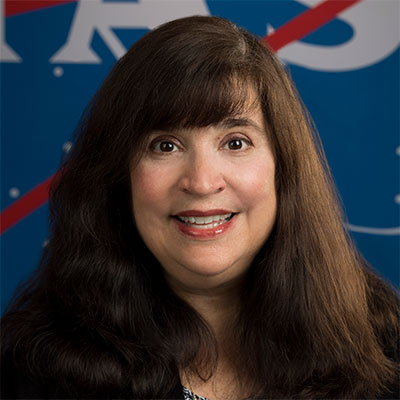
Gaudy is the Project Manager for NASA’s Electrified Powertrain Flight Demonstration (EPFD), leading a multidisciplinary team across four NASA centers and two industry partners to demonstrate megawatt-class electrified aircraft propulsion technologies. Her work focuses on transitioning these technologies to the U.S. aviation fleet and reducing aviation’s carbon footprint. With over four decades at NASA, she has held leadership roles across aeronautics and space programs, including Environmentally Responsible Aviation and Advanced Air Transport Technology, and contributed to STS-134, the second-to-last shuttle Endeavour flight.
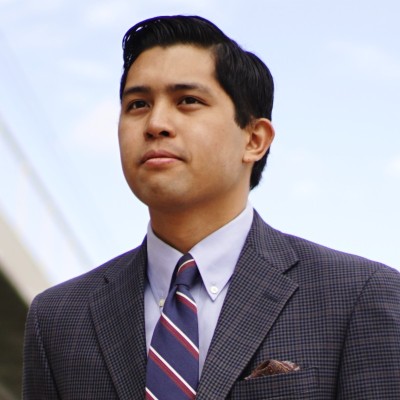
Shawn is a Masters student in Electrical and Computer Engineering at the University of Washington. His work spans embedded robotics development and GNSS based autonomous systems. Shawn received the Excellent Award at the inaugural IEEE New Era AI Innovation Challenge for his team’s work on drone-based AI systems that reduce multipath error in GPS, enabling more reliable autonomy in complex environments.

Jaydee is the Director of Test Operations at Agile Space Industries, where he leads teams testing next-generation hypergolic thrusters for in-space propulsion — one of the few hypergolic vacuum test facilities in the country. Previously a Principal Engineer at Raytheon, he was part of the team that successfully demonstrated the HAWC hypersonic concept, becoming Collier Award finalists. Before that, he spent nearly a decade at Boeing as a Flight Test Liaison Engineer. Jaydee holds a Master’s in Aerospace Engineering from the University of Washington and a Bachelor’s from Embry-Riddle, where he graduated as the top student in his class.
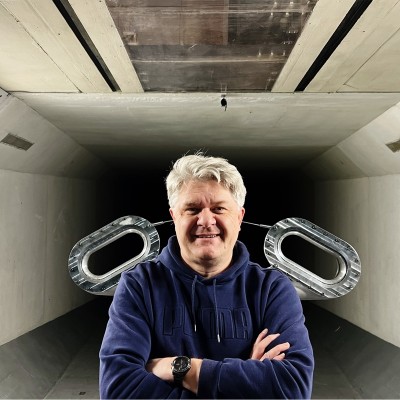
Andrei is the co-founder and CEO/CTO of Jetoptera, a Seattle-based propulsion and aerial mobility startup. A Ph.D. in Mechanical and Aerospace Engineering from Rutgers and a former GE9X Technology Maturation Leader at GE Aviation, Andrei brings deep engineering pedigree to his vision of making aerial mobility commonplace. His talk will showcase Jetoptera’s proprietary Fluidic Propulsive System™ — a distributed propulsion architecture that enables V/STOL aircraft with superior speed, range, payload, and efficiency compared to traditional rotor-based designs.

Ayush Goyal is a Senior Software Engineer at ServiceNow, where he works at the intersection of AI and distributed systems engineering, focusing on leveraging LLMs for synthetic data generation and system simulation. Previously at Microsoft, he built and scaled large-scale software systems across enterprise environments. He has spoken about LLMs and AI applications at engineering forums across the Pacific Northwest.

Adam is currently an independent software developer with over a decade of software development, engineering, and consulting experience for GCI and other organizations. Previously he worked at Boeing Huntsville as a Rocket Propulsion Engineer and holds Aero/Astro Engineering degrees from the University of Washington and the University of Alabama, Huntsville.
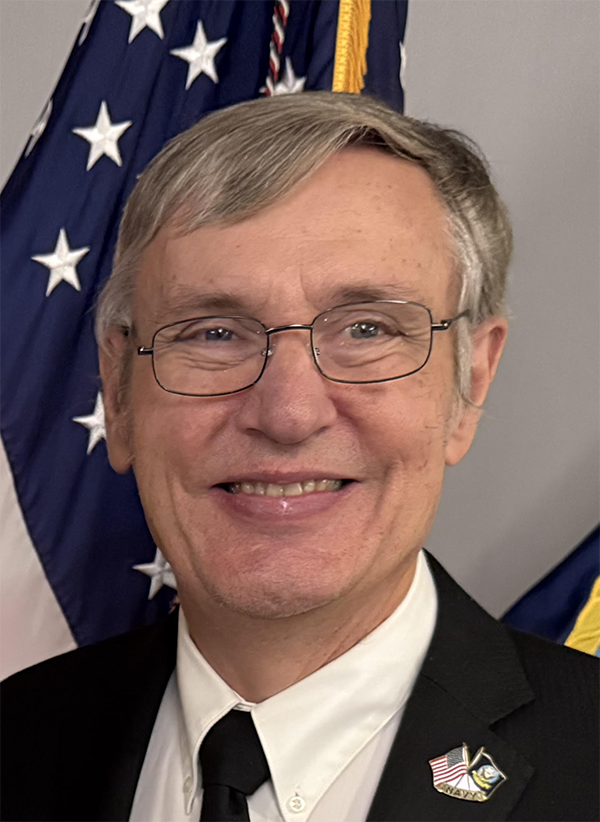
Professor Hermanson holds a BS from the University of Washington and MS and PhD degrees in Aeronautics from Caltech. His research spans compressible flow, combustion, and two-phase systems, with applications in scramjets, spacecraft propulsion, and CubeSat thrusters. He has authored 100+ publications, is a Fellow of ASME and an AIAA Associate Fellow, and has received an NSF CAREER Award among other honors. Last summer, he flew in a U.S. Navy F/A-18 Super Hornet with the Blue Angels, pulling up to 7.5 Gs.
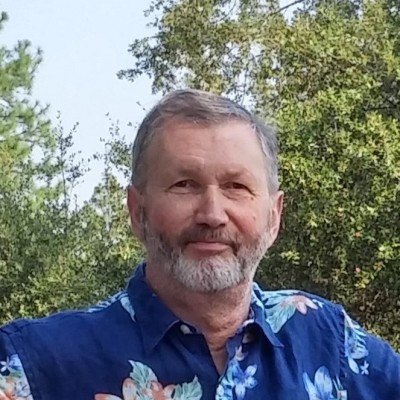
Ron has been fascinated by space exploration his entire life. Since 2001 he has served as a Solar System Ambassador for NASA’s Jet Propulsion Laboratory, sharing the excitement of planetary science with the public. That passion led him to the Museum of Flight in Seattle, where he has hosted astronauts, astronomers, and planetary scientists for public programs. He currently teaches classes for Bellevue College’s TELOS Retiree Education program and continues to volunteer at the Museum of Flight.
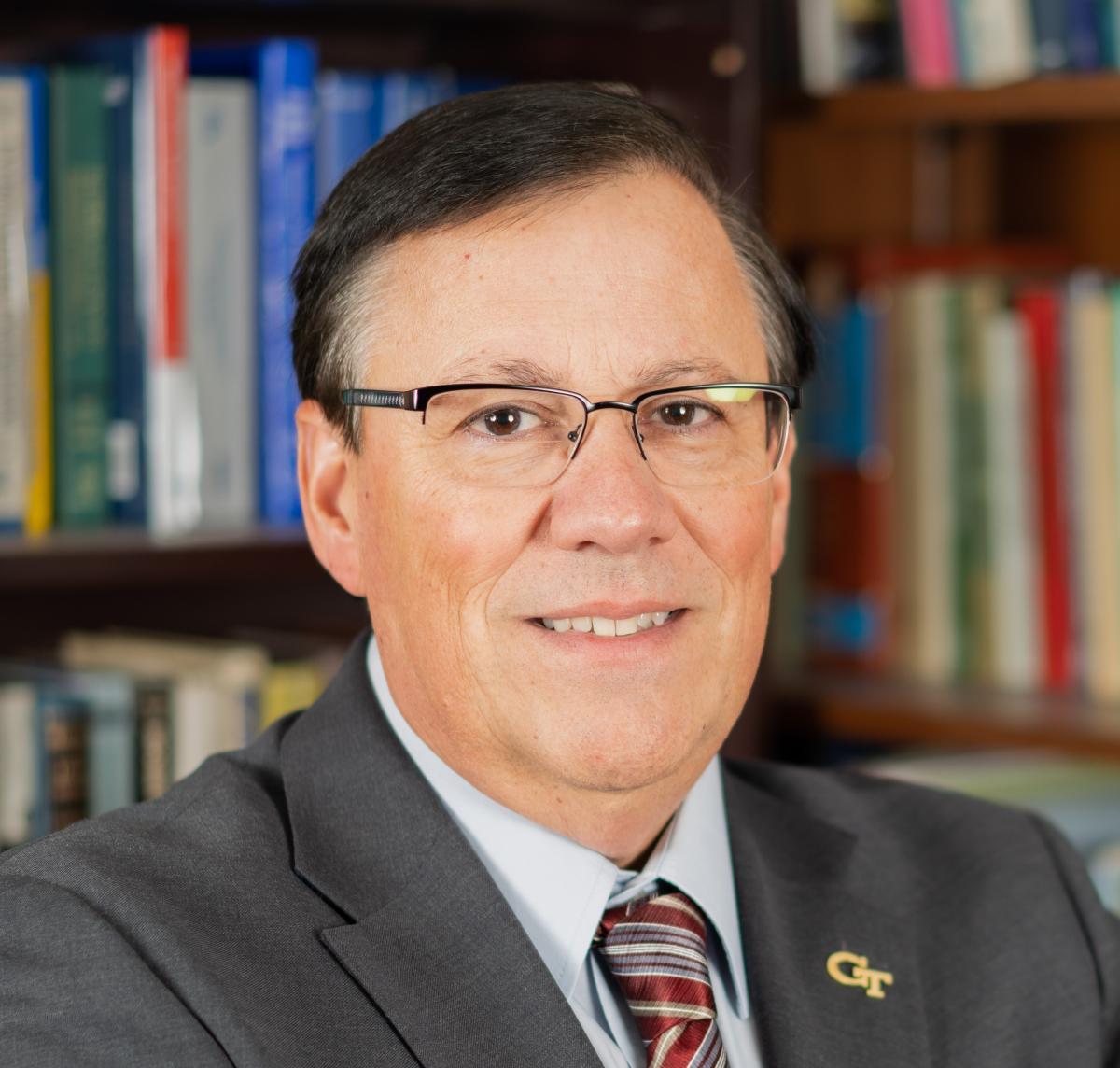
Dr. Mavris is a Distinguished Regents Professor and Boeing Professor of Advanced Aerospace Systems Analysis at Georgia Tech. Under his leadership, the Aerospace Systems Design Laboratory (ASDL) has grown into the largest lab of its kind, with a global reputation for excellence. His work spans conceptual aircraft design, system-of-systems thinking, design optimization under uncertainty, and collaboration between academia, industry, and government.

Director of Regions and Sections, AIAA Lindsay Mitchell is a member engagement leader at AIAA, overseeing a global network of the Institute’s seven regions and 58 sections. She previously worked at a 501(c)(3) educational nonprofit focused on geospatial intelligence, leading initiatives supporting young professionals, scholarships, and K–12 outreach. She lives in Northern Virginia with her husband, daughter, and Maltese terrier.
Upekesha has spent over 15 years turning complex engineering work into the guidance documents that move aviation forward. From flight-deck and cargo systems to cutting-edge autonomy concepts, she brings hands-on technical depth and direct committee experience with RTCA and SAE to the conversation on UAS safety and AI/ML in aviation. She holds Aerospace Engineering Bachelor’s and Master’s degrees from the University of Texas and Syracuse University.
With over 30 years of international experience spanning Boeing, Airbus, Bombardier, Dassault, and more, Neno is a registered Professional Engineer in Washington and an adjunct professor at UW. He holds U.S. and EU patents in aircraft electrical systems. His talk addresses a critical safety challenge in modern aviation: how to safely transfer power between multiple variable-frequency AC generators operating at different frequencies and phase angles on a shared aircraft power bus — a growing priority as aircraft electrical systems grow ever more complex.

Since joining as employee #3 at Agile Space Industries, Lars has led the prototyping, development, or qualification of multiple bipropellant thrusters for lunar landers, low-Earth satellites, geostationary satellites, and reusable space capsules. Previously, he was lead design engineer for water-electrolysis propulsion at Tethers Unlimited, led propulsion integration for the BlackSky Earth imaging satellites, and developed Mars drills at Honeybee Robotics.

Manny joined Blue Origin in July 2018, bringing with him a distinguished background as a U.S. Marine Corps veteran, a B.S. in Physics from UT Pan-American, and both an M.S. and Ph.D. in Materials Science and Engineering from UConn, earned while conducting research at the U.S. Army Research Laboratory. He has international recognition as a session chair for several radiation conferences and an invited short course instructor at RADECS in 2023.
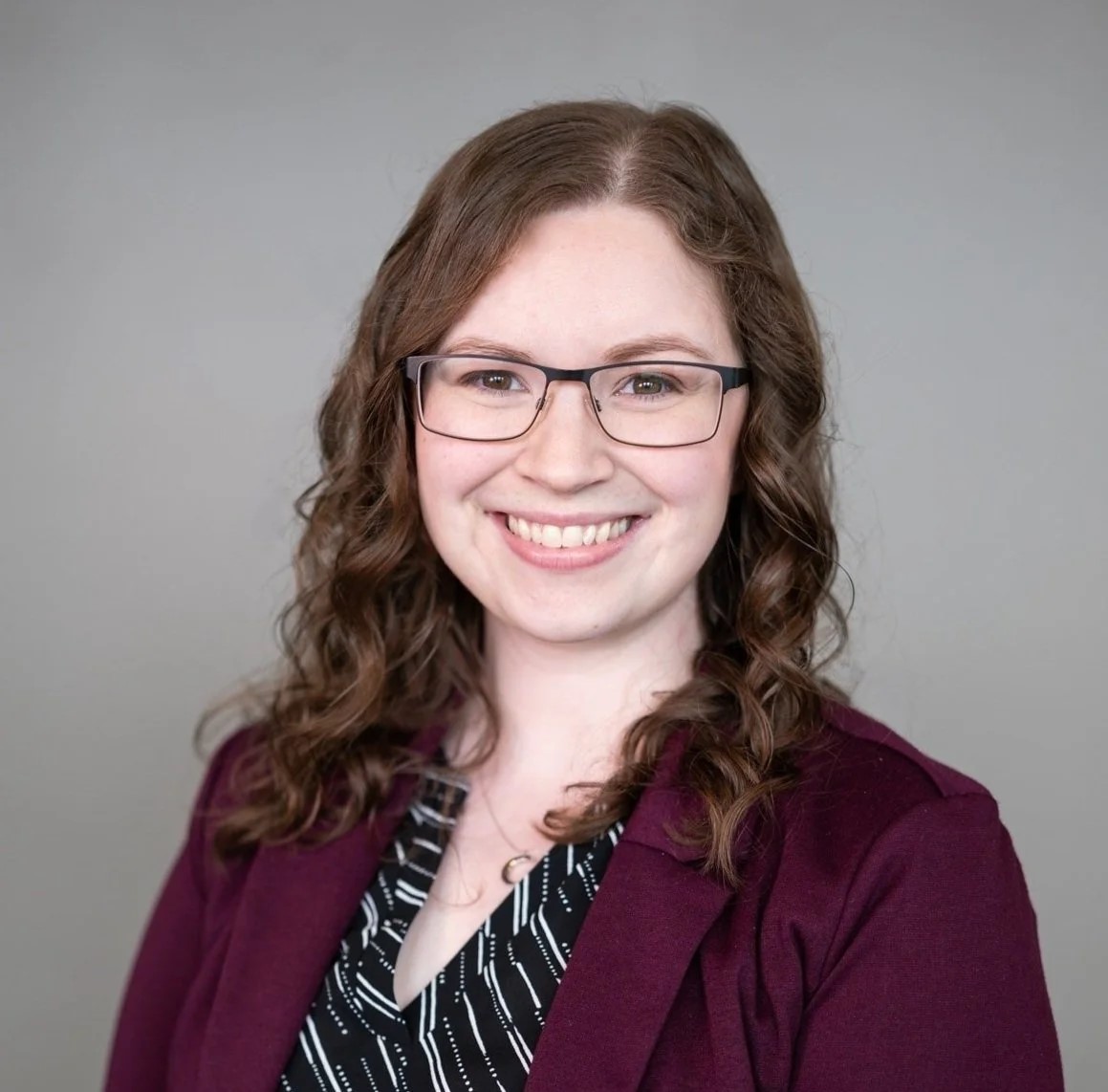
Melissa co-founded Off Planet Research in 2015 to produce high-fidelity simulants of lunar and planetary regolith and ices, helping organizations learn to operate beyond Earth orbit. A mechanical engineer, she works with clients including NASA and ESA. She serves on the LEAG Commercial Advisory Board and leads LSIC’s Extreme Environment Regolith/Surface Interface subgroup. OPR received Phase II SBIR funding from the NSF for a portable process to produce icy regolith simulants, and Melissa has co-authored research on volatile extraction from lunar ice.
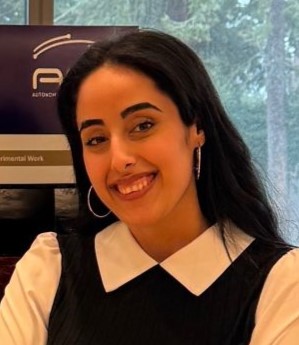
Christina is a PhD student in Electrical and Computer Engineering at the University of Washington, focusing on sustainable aviation technologies. Her recent work, EdgeVision Detect-and-Avoid, is an ultra-low SWaP AI vision system designed for long-range detection of non-cooperative aircraft in support of Remotely Piloted Aircraft Systems (RPAS). The project aims to enable safer small-drone operations in shared airspace. Christina’s work bridges electrical engineering, computer vision, and aerospace — pushing forward both sustainability and safety in the future of flight.
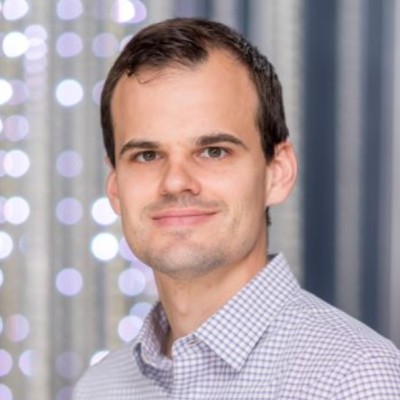
Jonathan is a spacecraft mechanisms engineer known for turning ambitious concepts into flight hardware. Currently Principal Spacecraft Engineer at Amazon and an Affiliate Assistant Professor at UW, he previously led deployable spacecraft technologies at NASA’s Jet Propulsion Laboratory for missions including RainCube, MarCO, and Europa Clipper. He has secured over $3.6M in funded research advancing technologies from TRL0 to TRL9 and is a recipient of the Presidential Early Career Award (PECASE) and an AIAA Associate Fellow.

Takao Suzuki is an engineer and scientist at Boeing Commercial Airplanes, mainly working on community noise technologies over 18 years. Prior to Boeing, he taught at the University of Fukui in Japan as an assistant and associate professor. He has a Ph.D. from Stanford University and is an AIAA Associate Fellow.
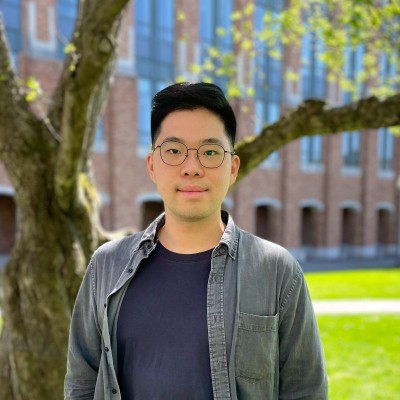
Eddie is a Ph.D. candidate in Aeronautics and Astronautics at the University of Washington, where his research bridges flight science, control theory, and machine learning. His SCALOS project — sponsored by NASA’s Commercial Supersonic Technology program — examines how supersonic transport airframe configurations behave during takeoff, approach, and landing. Testing was conducted at UW’s Kirsten Wind Tunnel, and the findings have direct implications for the next generation of commercial supersonic aircraft.
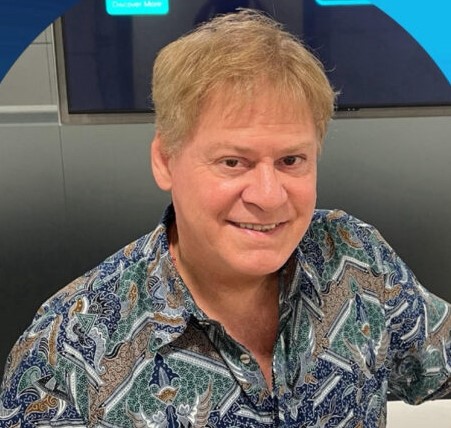
Karl is a Mandarin-speaking wireless and mobile ecosystem specialist with over a decade in smart cards, semiconductors, and RF technology. He spent five years in China driving adoption of NFC payments and TEE security across the smartphone ecosystem. Earlier roles include RF product marketing at Motorola/Freescale and international sales at Zetron. Karl holds a wireless/broadband certification from UW and has delivered dozens of presentations on satellite IoT and 6G across Asia, Europe, and America. His current focus: global satellite IoT and multi-orbit direct-to-device services.